







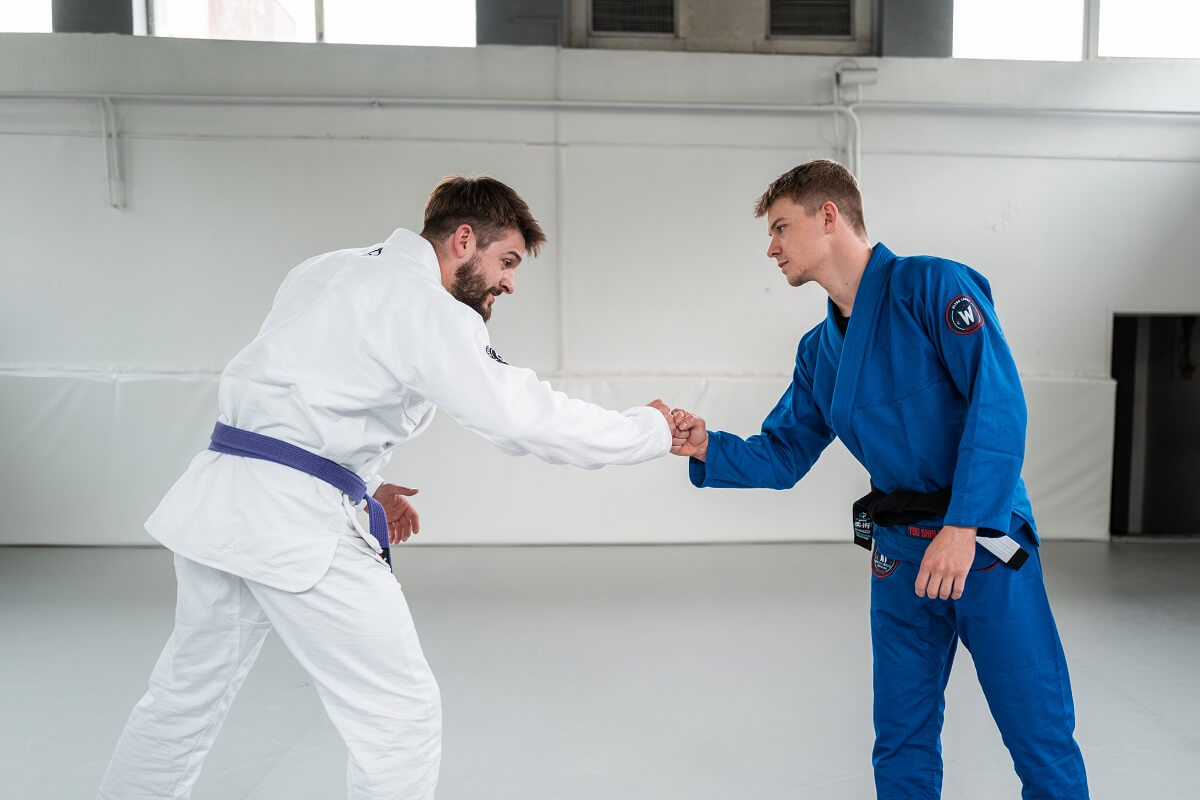
This is essential reading for anyone just starting their BJJ journey and looking for a gi, as well as for fighters who haven't tried Ground Game models yet. Learn how to choose the right BJJ kimono/gi tailored specifically to your needs.
-
A Brazilian Jiu-Jitsu gi becomes your ultimate ally in training and competition, as long as you pick a model tailored to your needs.
-
BJJ kimonos differ in subtle details that can significantly impact your progress. For instance, a thicker weave makes it much harder for opponents to get a strong grip.
-
We’ve prepared several comparison charts to help you choose the best uniform, and you'll find essential maintenance tips for your BJJ gi at the end of this article.
-
Ground Game gis are battle-tested models, rigorously tested by top athletes before hitting the market. You can rely completely on their quality and durability.
Gi Weave – Weight and Types
The weave refers to the specific type of cotton fabric used to construct the gi jacket. Different weaves feature unique fabric patterns, which directly impact the jacket's weight (GSM), tear resistance, and overall feel. On the market, you’ll find BJJ gis with jackets made from various weave types, including:
-
Single Weave: A light single-weave fabric, typically around 550 gsm. Popular for competitions where weight limits matter or for training on hot summer days.
-
Double Weave: A thicker, heavy-duty double weave, usually around 750 gsm. Highly durable and recommended for competition use.
-
Gold Weave: A versatile and rugged weave type suitable for both training and competition. It was developed as the ideal middle ground between single and double weave.
-
Pearl Weave: The most popular, lightweight, and durable weave pattern, ranging from 350 to 550 gsm.

BJJ Pants
BJJ pants are most commonly made from ripstop—a lightweight yet high-strength fabric. Its signature feature is a distinct crosshatch, grid-like texture. Quality BJJ pants must feature reinforced knee areas, as these sections take the most wear and tear on the mats. When picking a pair, pay attention to the drawstring as well: a round cord is easier to tie and stays secure much better during intense training than a flat one.
Belt loops matter just as much for overall comfort. In select Ground Game models, we’ve implemented a wide belt loop system that keeps the drawstring perfectly positioned so it won't dig into your waist during rolls.
Intended Use – Training or Competition?
For everyday BJJ training, go for a heavier, more durable gi, while for competitions—where gi weight can make or break your weigh-in—opt for a lighter model. Brazilian Jiu-Jitsu grants athletes more freedom in gear choices compared to disciplines like Judo. However, color and patch placement only cease to matter during gym training. If you plan to compete, check the product description to ensure the model meets official IBJJF guidelines, which strictly regulate athlete uniforms. Competition-approved gis must be white, black, or royal blue, with patches restricted to specific designated areas.
Select your gi size based on your height and weight. However, if you find yourself between sizes—such as A1L and A2—check the detailed measurement guide on the product page or get in touch with us directly, and we’ll be happy to help you pick the perfect fit!
How to Care for Your BJJ Gi?
Here are a few essential tips on how to wash your Brazilian Jiu-Jitsu kimono:
-
Turn it inside out before washing.
-
Set the water temperature to a maximum of 30°C.
-
Use gentle, natural detergents (harsh chemicals can weaken and degrade the fabric structure).
-
Hang-dry on a hanger, clothesline, or drying rack in a well-ventilated area.
-
Avoid tumble dryers at all costs, as they can cause severe shrinkage.
Udostępnij:
Boxing Gloves – How to Choose the Right Pair?
Boxing hand wraps – why and how to tie them